

Planning catering Wharton TX for a wedding, business gathering, or milestone celebration starts with more than choosing dishes. The menu, service style, venue setup, schedule, and guest needs all shape how the meal feels. A clear plan helps you create an elevated experience while keeping the practical details in view.
Share your event details and start a catering conversation
What should you decide first for a Wharton-area event?
Begin with the event’s purpose and the experience you want guests to have. A wedding reception may call for a paced, celebratory dinner. A business gathering may need an efficient meal that leaves room for presentations and conversation. For a milestone celebration, the food can bring family and friends together around a favorite cuisine or meaningful tradition.
Before comparing menus, make a short planning brief. It does not need to be final. An estimate of the guest count and a realistic event schedule are enough to start a useful conversation. Include:
- The occasion, event date, and approximate guest count.
- The venue name or type, and whether you have already confirmed it.
- The planned arrival, meal, program, and departure times.
- Your preferred atmosphere, such as formal, relaxed, interactive, or family-centered.
- Any known dietary needs, cultural food traditions, or service requirements.
These details help a caterer recommend a plan that fits the occasion rather than offering a menu in isolation. If you’re still comparing event types and menu possibilities, explore the special event catering options and consider how the format might adapt to your gathering.
Shape a bespoke menu around your guests and the occasion
A thoughtful menu feels connected to the people at the table. You might begin with a cuisine you love, a family recipe tradition, the tone of the celebration, or a few dishes that can anchor the meal. Bespoke planning allows the menu to draw on different cuisines and reflect the client’s tastes and cultural backgrounds. The goal is a coherent experience, not a collection of unrelated favorites.
As you shape the menu, consider the complete progression: a welcome bite or appetizer, the main meal, sides, dessert, and any late-evening food. Each course should suit the timing and energy of the event. A reception with a short program may benefit from a different sequence than a seated dinner with speeches. Ask how the dishes will be served, how guests will move through the meal, and what can be prepared or finished at the venue.
Use the catering menu page to begin exploring possibilities, then treat the selections as a starting point for a conversation. Share favorite ingredients, cuisines, family customs, and any dishes that matter to the event. You can also look through the event gallery for visual inspiration on how food and presentation can complement a celebration.
Think about the guest journey as you make choices. Will guests sit down soon after arriving, or will they mingle before dinner? Is the meal the centerpiece of the occasion, or does it need to fit between a program and dancing? The answers can guide portion sizes, pacing, menu variety, and how much time guests spend away from the main activity. When the event has a particular theme or color palette, mention it as context for presentation without letting appearance outweigh flavor and ease of service.
It also helps to identify the priorities that matter most. You may want one signature dish, a menu that highlights a family tradition, or a variety of options for a broad mix of guests. Rank those preferences and share any firm requirements separately from nice-to-have ideas. This gives the caterer a practical way to shape a menu that feels personal while still working for the event’s timing and setting.
Plan for dietary needs early
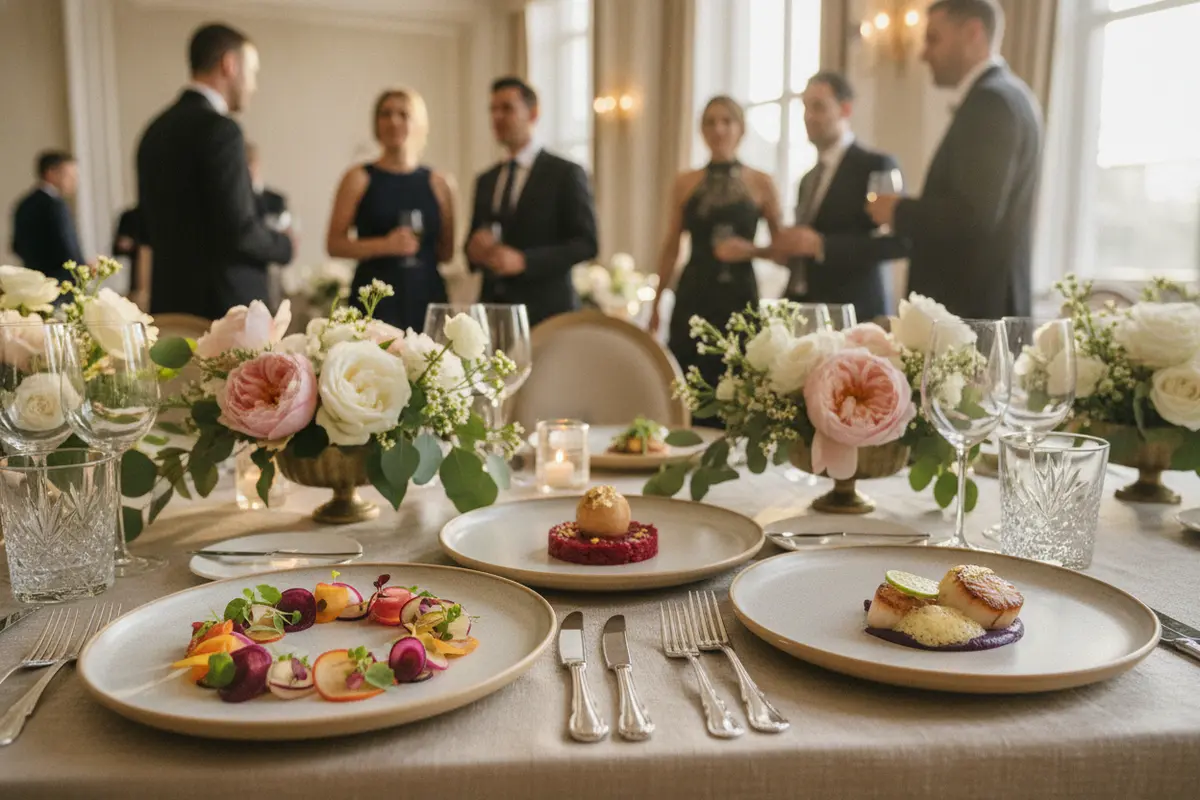
Ask guests to communicate allergies and dietary preferences through the RSVP process, and share the information with the catering team as it becomes available. Distinguish a food allergy from a preference or dietary pattern when you can; that helps the team understand what needs to be addressed. Confirm the final process for identifying suitable dishes and communicating them to guests.
Do not assume that a single dish will work for every guest with a dietary need. Discuss the specific requirements, the number of guests affected if known, and how the meal will be served. For a buffet or stations, ask how guests can identify suitable items and whether staff can answer questions. For a plated meal, clarify how meal choices will be collected and matched to the right guests.
Choose a service format for your venue and schedule
Service style changes the pace, presentation, staffing needs, and guest interaction. The best fit depends on the event design, venue layout, schedule, and the kind of hospitality you want to offer. Use this comparison to organize your questions; the final recommendation should account for your specific space and guest count.
| Service format | Guest experience | Venue and schedule questions |
|---|---|---|
| Plated | A coordinated, seated meal with courses served to guests. | Are tables, seating, and service paths arranged for smooth service? How much time is reserved for dinner? |
| Buffet | Guests choose from an arranged selection and can move at their own pace. | Where will the buffet sit, and how will lines move without interrupting the program? |
| Family-style | Shared platters encourage conversation around the table. | Is there enough table space, and can the chosen dishes be passed comfortably? |
| Stations | Food displays invite guests to circulate and explore different offerings. | Can the room accommodate several service points, and how will guests circulate? |
A combination can also make sense. For example, a reception might begin with passed appetizers, move into a seated meal, and finish with a dessert display. If you’re planning a wedding, compare the ideas here with the dedicated Houston wedding catering service information. A business event may need a different balance; review corporate catering and event options when planning around a meeting, client function, or company celebration.
What venue details should you confirm before booking?
For off-premise catering, the selected venue is part of the service plan. Before you finalize details, verify that the venue permits external catering and ask what facilities are available to the catering team. Café Natalie Catering serves client-selected venues where outside catering is allowed and also maintains preferred-vendor relationships at select venues. Confirm the policies directly with your venue; requirements can vary by location.
Walk through the space with the meal in mind. Note where guests will gather, where food can be staged, how staff can reach the service area, and whether the room needs to be reset between portions of the event. Discuss access times, loading arrangements, kitchen or prep facilities, power access if relevant, and any restrictions on equipment or setup. Share the venue’s contact information and planning documents with the caterer once available.
Ask how the proposed service style fits the physical layout. A compact room may call for a different buffet arrangement than a spacious reception hall. Stations need circulation room. A plated dinner needs practical service paths. The venue itself may have rules about décor, cleanup, deliveries, and when vendors can enter or leave. Resolve these questions early rather than leaving them for event week.
Think through the room from the perspective of a guest who has just arrived. Is the path from the entrance to the welcome area clear? Can guests find their seats and then reach the meal without crossing the main program space? Are there practical routes for guests with mobility needs? These questions can influence where food is positioned and how the service plan supports the flow of the event. Share any room diagrams or photographs with the planning team if they are available.
Clarify what the venue supplies and what must be brought in. Depending on the event plan, you may need to discuss tables, chairs, linens, dinnerware, glassware, serving pieces, or other equipment. Café Natalie Catering’s service components can include equipment rental and staff, but the details should be confirmed for the particular proposal. Put responsibilities in writing so the host, venue, and caterer have a shared understanding.
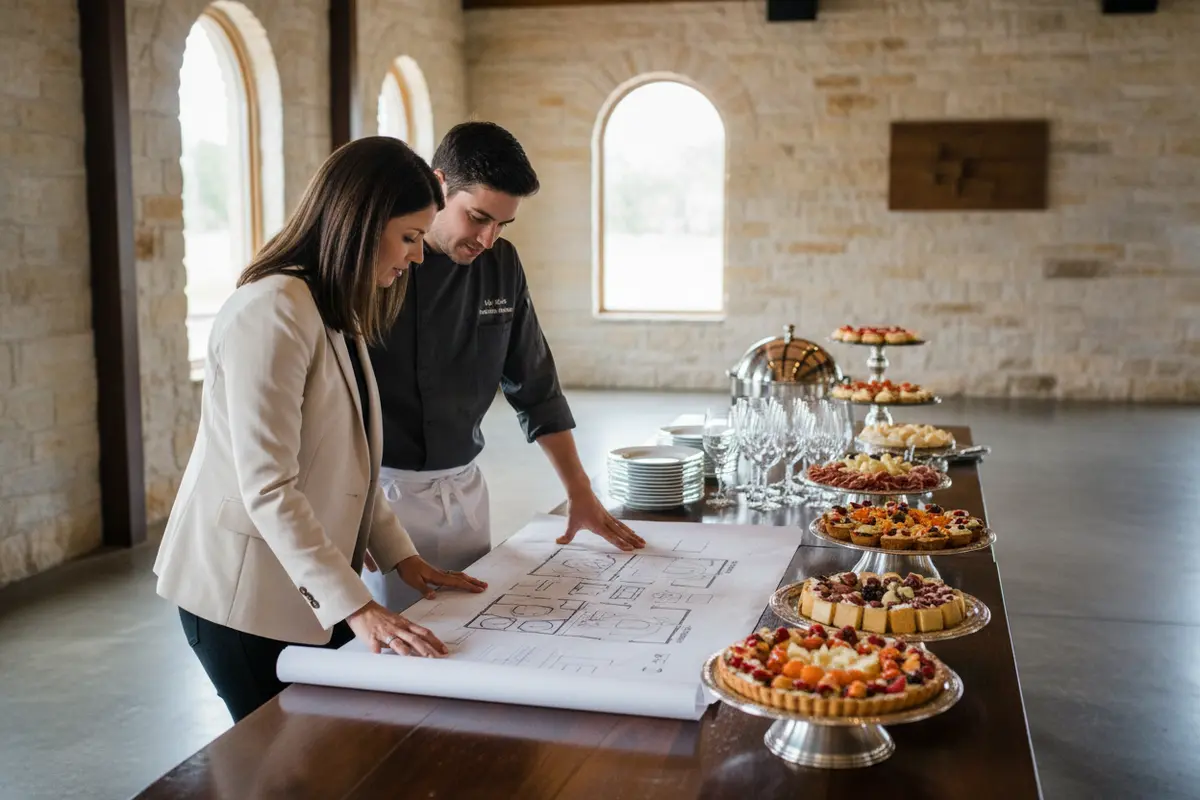
Use the venue planning information as one reference, then verify the details for your specific location. For a closer look at the company’s approach and background, visit about Café Natalie Catering. Venue fit is a planning conversation, not a promise that a particular space is available or approved.
Coordinate guest count, timing, and travel
Event plans in the Wharton area deserve a clear timeline, especially when the caterer and venue are coordinating from different locations. No specific travel time or venue arrangement should be assumed in advance. Share the venue address, access instructions, event schedule, and the time the room must be ready. Ask the caterer what information they need to plan transport, setup, staffing, and service for that date.
Build the schedule around the full guest experience, not only the meal. Include vendor access, room preparation, guest arrival, cocktail or welcome time, announcements, meal service, speeches, and cleanup. Identify who will communicate changes on the event day. A single point of contact helps the venue, caterer, planner, and host work from the same information.
Guest count can affect seating, meal quantities, staffing, and the movement of guests through the room. Give an initial estimate during the consultation, then confirm how and when the final count is due. If attendance changes, share the update promptly. Also mention guests arriving at different times, children, accessibility considerations, or any program element that may affect when people can eat.
Keep a simple planning document with the current schedule, venue contacts, service decisions, and outstanding questions. Update it when the event changes and share the latest version with the people who need it. This can prevent mismatched assumptions, such as one vendor expecting an earlier room access time or a meal being planned around an outdated program. For a location outside the caterer’s usual routine, ask early what venue information and access details are needed to confirm logistics. Do not rely on an assumed travel time; agree on the event-day arrival and setup plan with the catering team.
Consider a backup approach for conditions the venue may control, such as a change in room availability or an outdoor setup affected by weather. Ask who will make the decision, when it needs to be made, and how the catering plan would adjust. A simple contingency conversation can clarify responsibilities without overcomplicating the event plan.
Prepare for an initial catering consultation
A useful consultation is specific enough to uncover decisions but flexible enough to develop the right plan. Café Natalie Catering offers menu customization and consultation; start with the event details you know and identify what is still undecided. These questions can guide the conversation:
- Which menu direction and service format fit the occasion, venue, and schedule?
- What venue policies, access details, or facilities should be confirmed before the proposal is finalized?
- How will dietary accommodations and meal selections be gathered, prepared, and identified?
- What equipment, service items, or rentals are included in the proposed plan, and what must the venue provide?
- How will setup, service, and cleanup fit the event timeline?
- What guest-count milestones and planning decisions are needed before the event?
- Who should be the point of contact for the venue and event-day changes?
For an overview of common service and planning questions, consult the catering FAQs. When you’re ready to discuss your own date and plans, send the details through the contact page. A clear inquiry makes it easier to talk through menu direction, logistics, and next steps.
Call to discuss your Wharton-area event
Frequently asked questions about catering in Wharton, TX
Can I choose a venue that is not on a preferred-vendor list?
Café Natalie Catering is an off-premise caterer and can serve client-selected venues that allow external catering, alongside preferred-vendor partnerships at select venues. Check the venue’s outside-catering policy and share its requirements before making plans. Each venue’s rules and practical setup should be confirmed directly.
Can the menu combine different cuisines?
Yes. Menus can be customized to reflect the client’s tastes and cultural backgrounds, including a thoughtful combination of cuisines. Share the dishes, traditions, and flavor preferences you want represented so the menu can be planned as a cohesive experience.
Which service style is best for a wedding or celebration?
There is no single format for every event. Plated service can suit a structured dinner, while buffets, family-style service, or stations can support different kinds of guest interaction. Compare the venue layout, timing, guest count, and desired atmosphere with your caterer before choosing.
What information should I include in my first inquiry?
Share the event date, occasion, approximate guest count, venue or location details, schedule, and any known menu or dietary considerations. If some details are not settled, say so. The initial conversation can help identify what to confirm next.
Plan a polished Wharton-area celebration
With a menu shaped around your guests, a service format suited to the venue, and logistics discussed early, catering can support the whole event rather than just the meal. Café Natalie Catering brings full-service off-premise catering to weddings, corporate events, and special celebrations, with bespoke menus and professional event service.
Call Café Natalie Catering to begin planning
Share what you have in mind, and take the next step toward a celebration that feels considered from the first welcome through the final course.